Growth Without Governance Is Just Expensive Risk

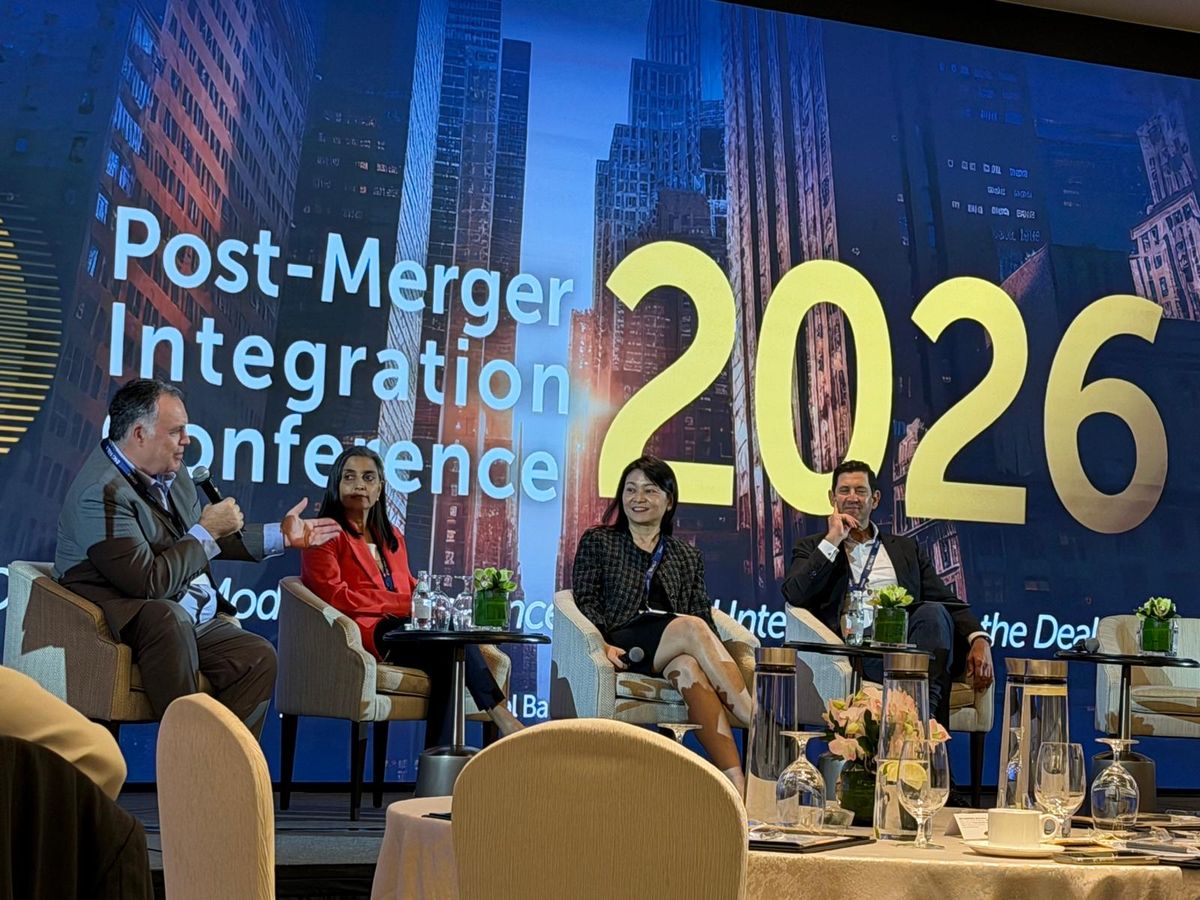
On 20th May I sat on a panel at the Post-Merger Integration Conference (PMIC) 2026 in Singapore, hosted by the IMAA Institute. We had been invited to give a fund-level view on governance under a regulated umbrella. How governance works, where it goes wrong, and why it matters for anyone buying, integrating or selling businesses. The four of us came at the topic from different angles.
The panel
Martin O'Regan — Founder of SOLAS and Chair of the Singapore Fund Directors Association. Martin sits as an independent director on funds, investment vehicles, and family offices across the region. He has seen, up close, what good and bad boards look like when things go wrong.
Emily Low — Senior Partner at Dentons Rodyk and Co-head of the Investment Funds practice. Emily is the go to person for fund formation in Singapore. She masters private equity, venture, infrastructure, real estate, hedge funds and has been doing it for over twenty-five years.
Damayanti Shahani — Founder and Managing Director of Principium Consulting (now operating as Acclime). Damayanti is a lawyer by training, formerly at Freshfields, O'Melveny and the US SEC, and now runs a solid regulatory compliance shop serving fund managers in Singapore.
Myself — Steve Knabl, Managing Partner at Wealth Management Alliance, a Singapore multi-family office. Twenty-seven years in financial services, mostly on the operating side: trading at Swissquote, sixteen years running the regulatory hosting platform at Swiss-Asia, now at WMA. I have been regulated in Switzerland, Singapore, Hong Kong, Cayman and the US. I have built the controls, I have sat through the inspections, and I have seen the consequences of taking shortcuts.
What governance actually is
When people hear "governance," half of them think of compliance officers, policies, and thick binders nobody reads.
But think of Governance as the answer to a harder question: when something goes wrong, and something always eventually goes wrong, what stops it from becoming a disaster? Who notices? Who says something? Who has the authority to act?
Martin opened with the phrase that we all keep coming back to (including the regulators): tone from the top. Culture flows downwards. There is no governance framework on earth that survives a bad culture at the top, and there is no culture so good that it doesn't need a framework underneath it.
In practice, governance is the board that isn't made up of the founder's family and friends. You need that independent director who asks the uncomfortable questions during board meetings. A company can survive bad luck, bad markets, even a bad year. It struggles to survive bad governance, because bad governance is what lets small problems grow into things you can't fix.
The structures only work if you respect them
Emily walked through how private funds are built. Most of what you see in private equity sits in one of three forms — limited partnerships, corporate vehicles like Singapore's VCC, or unit trusts for things like real estate. Each has its own document set and its own way of allocating responsibility between manager and investor.
Emily highlights that the fund documents are not lawyer-paper. They are the rulebook the manager has to live by for the next eight, ten, sometimes twelve years. The Limited Partnership Agreements and the side letters determine what you can charge to the fund, what you can't, when you need investor approval, when you don't, how conflicts get handled.
The pitfalls Emily flagged were familiar. Managers charging broken-deal fees when their documents don't allow it. Travel and diligence expenses in the wrong bucket. Co-investment opportunities not properly offered around. Side letter obligations forgotten until an investor reminds you. Conflicts inside the wider manager group such as the same team running multiple funds, looking at the same deal etc...
One of the important piece of governance is the Limited Partner Advisory Committee (LPAC). The LPAC exists to help managers navigate conflicts and grey areas. But the LPAC provides guidance, not cover. Going to it doesn't transfer responsibility off your desk. The manager still has to make the call, disclose properly, and actually mitigate the conflict, not just declare it and move on.
The regulator is not optional
Damayanti made a point sometimes lost on people outside the fund world: in Singapore, fund management is a regulated activity. The fund manager is a licensed financial institution. That licence is not a one-time blessing. It is a continuous obligation: fit-and-proper testing, AML, anti-insider-trading, risk management, communication standards. Tested every year through statutory audits, internal audits, MAS inspections, and operational due diligence from any institutional investor about to write you a serious cheque.
The regulator has been increasingly active. Recent enforcement actions against fund managers for failures in risk management, not looking after the risk in the asset classes they were managing and for undisclosed conflicts of interest, where directors had personal stakes in entities the fund was then funding. None of this is exotic. It is the basics. But the basics are what gets ignored or missed when a firm grows faster than its oversight controls.
The regulatory layer runs through everything; diligence, valuation, conflicts, who sits on which committee. If you treat compliance as something the compliance team handles while the deal team does the real work, you will eventually get caught. Governance needs to be communicated effectively across the board.
The story I keep telling
One of our Funds invested in a company that ticked every box on paper. Contracts tight, lawyers had done their job, diligence file thick. What it didn't have - which we didn't realize at the time - was a real board. The directors were close to the founder. Nobody asked the questions an independent Director would have asked.
Long story short, some of the money the fund invested was misappropriated or misused by management. Eventually the company went bankrupt. The fund was a medium sized shareholder and no longer had the money to fight a legal case. But thankfully other investors that had invested organised a class action law suit. We spent three years pulling up emails, answering questions, providing documents, to the class action lawyers. We were insured, so we recovered some of our legal costs (due to a counter suit), and eventually won the court case and recovered a few cents on the dollar, but what we didn't recover was the time.
The lesson isn't "do better due diligence." We did the diligence. The lesson is that diligence at the point of investment is not enough. Governance has to be alive inside the company you're backing, and it has to stay alive long after you've wired the money. Small companies evolve fast, in good ways and bad. You can't check on them once and move on. You go on site. You talk to people who left to really get a sense of the culture.
Martin made the same point from another angle. He sits as an independent director on real estate vehicles holding hotels in jurisdictions where revenue has dried up. Lending costs go up, covenants get breached, and at some point you make hard decisions. Once a vehicle becomes insolvent, the board's obligation legally shifts from investors to creditors. The people who put the money in are, in a real sense, out. That is exactly the conversation a serious independent board is there to have — and exactly the conversation a friends-and-family board will avoid until it is too late.
Friends and family don't cut it
Most companies that fail badly fail the same way. A charismatic founder. A passive board. In short, everything looks fine until it doesn't.
The fix isn't complicated and expensive, simply put real people on the board. Industry-relevant people. People who don't owe the founder anything. People who can say no, and whose no actually means something.
This is sometimes uncomfortable for founders, because it means accepting they are no longer the only voice in the room. But the moment you raise serious institutional money or private equity money — that is the moment you have to be accountable. Friends-and-family boards are fine for the seed round. Not when you are managing other people's capital at scale.
Damayanti made a related point at the manager level: competence is not a one-time test. You don't get licensed seven years ago and coast. The regulator expects you to keep up with the markets, the asset classes, the jurisdictions you invest in. Where you don't have the expertise in-house, you bring in consultants who do. The shame is not in admitting what you don't know. The shame is in pretending you know it.
Why governance is a valuation argument
If you are growing fast without governance, an investor will surely discount the valuation quite heavily. Investors don;t like to pay full price for chaos.
If you are growing in parallel with your governance, building the boards, the controls, the policies, the independence as you scale the discount disappears and may even become a premium.
So when people tell me governance slows them down, I push back. Governance done well doesn't slow you down. It increases the value of the company you are building. It is the difference between selling for a strong multiple.
Growth without governance is just expensive risk. You are growing the numerator and the denominator at the same time, and you don't notice until you try to sell.
Right-sized, not over-sized
I am saying that you need to have the best in class control environment in an early-stage company. You should obviously not overdo it.
A small company can start with a board that has at least one genuinely independent voice that has the requisite industry experience and not forgetting a good policy on conflicts of interest. Not forgetting real and honest reporting to investors because because it builds trust.
Also, keep in mind that your governance should grow with your business. Not faster, not slower. Just keep pace.
Thanks to Martin, Emily and Damayanti for a sharp panel, and to PMIC for putting it together.